
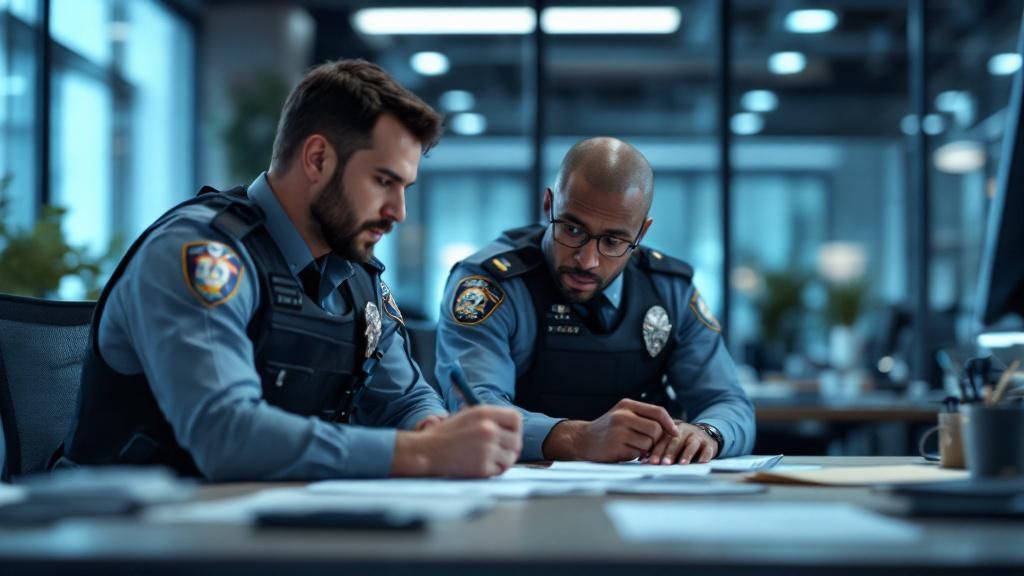
Police forces across the country are receiving specialist support from a newly established democracy protection unit to tackle the rising tide of threats and abuse directed at Members of Parliament. Police chief Chris Balmer has been tasked with leading the initiative, responsible for helping forces investigate and combat what officials are calling “anti-democratic crimes”. The move comes as instances of offences against MPs have increased more than twofold since 2019, reaching nearly 1,000 in the previous year. Security Minister Dan Jarvis characterised the situation as without precedent, stating that “the volume, breadth and tempo of threats against elected representatives” has become deeply concerning. The announcement highlights mounting concerns about the safety of politicians and the deteriorating tone of public conversation about Parliament.
The Scale of the Crisis
The figures paint a grim picture of the mounting danger facing MPs. Data disclosed to the BBC indicates that between 2019 and 2025, MPs submitted 4,064 crimes to the Met Police’s Parliamentary Liaison Team. The year-on-year growth have been relentless, with 976 offences recorded in 2025 versus just 364 in 2019. This near-threefold rise reveals a concerning pattern that has prompted urgent action from the senior ranks of government and law enforcement.
The nature of the offences documented is highly troubling. Abusive messages lead the statistics, accounting for 2,066 offences across the six-year period, with damage to property and harassment. Most alarmingly, death threats have increased sharply, with 50 reported in 2025 alone, up from 31 the prior year. Several MPs have told the BBC that threats of this nature have increased substantially, yet considerable numbers are not reported to law enforcement, implying the real magnitude of the issue could be far worse than official figures reveal.
- Malicious communications comprised the largest category of recorded offences.
- Death threats rose from 31 in 2024 to 50 in 2025.
- Many MPs do not report threats they receive to police authorities.
- Acts of physical violence remained relatively modest but demonstrate increases around elections.
Democratic Safeguarding Framework Emerges
Chris Balmer, the police chief tasked with leading the new nationwide democracy safeguarding unit, has been given a comprehensive remit to address the crisis directly. His appointment constitutes a significant escalation in the law enforcement response to risks to Members of Parliament, elevating the issue to a nationwide basis rather than leaving separate police forces to manage incidents in isolation. The establishment of this focused team indicates that authorities now view crimes against democracy as a separate classification demanding specialist expertise and shared intelligence coordination across every police force across England, Wales, Scotland and Northern Ireland.
The creation of this portfolio occurs at a pivotal juncture for British democracy. With threatening messages increasingly frequent and coordinated abuse growing more sophisticated, the government and police leadership have acknowledged that existing methods are insufficient. The unit will function as a central hub for intelligence, guidance and support, allowing police forces to react with greater effectiveness the growing threat landscape. By consolidating expertise and resources, the initiative aims to overcome fragmentation that have long obstructed joined-up action to what is now acknowledged as a fundamental threat to the safety of Members of Parliament.
Chris Balmer’s Scope of Authority
Balmer’s role covers three core functions intended to strengthen police activities across the country. Firstly, he will oversee intelligence on threats to politicians, building a comprehensive overview of new developments and dangerous persons. Secondly, he will counsel police forces on appropriate categorization of crimes against democracy, maintaining uniformity in how cases are logged and prioritised. Thirdly, he will provide specialist support to officers looking into suspected individuals, leveraging expertise to build stronger cases and increase successful prosecutions.
The appointment demonstrates the gravity with which the government now views the threat to democratic institutions. Security Minister Dan Jarvis personally wrote to Balmer stressing the significance of keeping pace with the evolving nature of threats and abuse. This high-level involvement reflects political commitment to supporting the police response, guaranteeing that the new unit has the support and funding necessary to succeed in its difficult remit.
Individual Impact on Elected Officials
Behind the statistics of rising threats lies a deeply troubling reality for MPs and their families. Many elected representatives now live with persistent anxiety, implementing robust precautions to protect themselves and their loved ones. The mental toll of receiving death threats has turned into a routine risk of modern politics, with MPs reporting that such abuse has become commonplace. Yet in spite of how often these incidents happen, many decline to inform the authorities, suggesting the true scale of the issue may be considerably worse than official figures suggest. The acceptance of intimidation against elected public representatives constitutes a significant erosion of the safety and dignity that should accompany public service.
The economic and operational burden of strengthened protection has weighed significantly on individual MPs and their families. Those who have been subject to credible threats have been compelled to install panic buttons, surveillance cameras, and reinforced doors in their residences—transforming family homes into secure installations. Beyond the considerable expense involved, these steps serve as a persistent, deeply troubling reminder of the danger they encounter. The psychological toll reaches family members, who must navigate the stress of existence under constant threat. For numerous parliamentarians, the choice to pursue or continue in elected office has become firmly connected with individual danger, prompting significant concerns about if democracy can operate properly when elected officials must prioritise self-protection at the expense of community contact.
Rushworth’s Trial
Labour MP Sam Rushworth’s experience illustrates the distressing circumstances affecting modern parliamentarians. Beginning in 2024, he suffered a persistent wave of death threats from an unstable constituent, driving him to implement extreme steps to shield his family. Rushworth fitted panic buttons and CCTV systems in his property, turning his family home into a defensive stronghold. The experience has burdened him with the competing demands of representing his parliamentary constituency whilst operating under ongoing threats. His case underscores how individual members of Parliament regularly have to rely on themselves, assuming responsibility themselves when formal support systems fail to provide adequate protection.
The fleet’s Daily Battle
Other MPs encounter comparably difficult situations, with harassment campaigns growing more advanced and persistent. The everyday experience for affected MPs entails dealing with concern, implementing security protocols, and working to uphold normal parliamentary duties whilst facing sustained assault. Many struggle to distinguish between credible dangers and incendiary speech, forcing them to treat every hostile message with due consideration. The cumulative psychological impact of sustained abuse inflicts considerable damage on psychological wellbeing and resilience. These individual experiences highlight why the fresh national mechanism is so critically required—individual MPs should not bear the responsibility for self-defence against what amounts to assaults on democracy in themselves.
Emerging Threats and Unequal Targeting
The nature of threats facing parliamentarians has undergone fundamental change in recent times, expanding in diversity and sophistication. Abusive messages now account for the majority of recorded incidents, representing over half of all criminal acts directed at parliamentarians between 2019 and 2025. This category encompasses abusive emails, online harassment, and intimidatory correspondence—a type of assault that leverages digital platforms to target MPs with unprecedented ease and lack of accountability. The scale of this issue stretches well past traditional physical security concerns, necessitating law enforcement agencies to establish fresh investigative approaches and digital forensic expertise to locate offenders through multiple digital platforms.
The striking year-on-year increase in recorded crimes reveals an worrying pattern. In 2019, police recorded 364 crimes against MPs; by 2025, this figure had almost trebled to 976 alleged offences. Most concerning is the rise in lethal threats, which climbed from 31 in 2024 to 50 in 2025, indicating an escalation in the severity of harm beyond simply its quantity. Defence Secretary Dan Jarvis’s characterisation of the threat as “unprecedented” reflects sincere worry within ministerial circles about whether current safeguarding measures can adequately safeguard elected MPs against this emerging danger.
| Offence Category | Total Reports 2019-2025 |
|---|---|
| Malicious Communications | 2,066 |
| Harassment | 1,200 |
| Criminal Damage to Building | 580 |
| Death Threats | 231 |
| Assault | 68 |
Security Measures and Government Response
The government’s commitment to protecting MPs has increased significantly since the devastating killings of Jo Cox in 2016 and Sir David Amess in 2021. Operation Bridger, launched in the aftermath of Cox’s death, forms a foundation of this protective framework, providing MPs access to enhanced protective arrangements for both their homes and constituency offices. In 2017–18 alone, expenditure on MP security rose to £4.2 million, constituting a 60 per cent rise on the previous year. Whilst protective budgets have varied in subsequent years, expenditure has stayed significantly higher set against earlier levels, demonstrating an formal recognition that threats to parliamentarians constitute threats to democracy itself.
Despite these substantial spending on security infrastructure, many MPs contend that current measures remain inadequate in the face of emerging online and physical threats. Individual parliamentarians have acted independently, installing panic buttons, CCTV systems, and reinforced security at significant personal expense. Labour MP Sam Rushworth illustrates this frustration, having upgraded his home security significantly after receiving multiple death threats from an obsessed constituent. Such piecemeal measures emphasise a key deficiency: whilst perimeter security has improved, the emotional burden and cost burden on individual MPs demonstrates that structural reforms—including the new national democracy protection unit—are crucial to ensure elected representatives can discharge their responsibilities without fear.
- Operation Bridger delivers enhanced security for MPs’ homes and constituency offices nationwide
- Security costs rose 60% to £4.2 million in 2017–18 after Cox’s murder
- Many MPs augment state-provided security with private security arrangements and technology
